
When I was a child, I watched my mother and grandmother sewing. But, I had not seen them using pins in their sewing. But when I grew up, I noticed people with sewing pins. That was quite new to me. I asked and got to know what actually sewing pins do. My mother and grandmother didn’t use those, because pins were not that much available back then. So, they practiced to sew with that much accuracy without sewing pins.
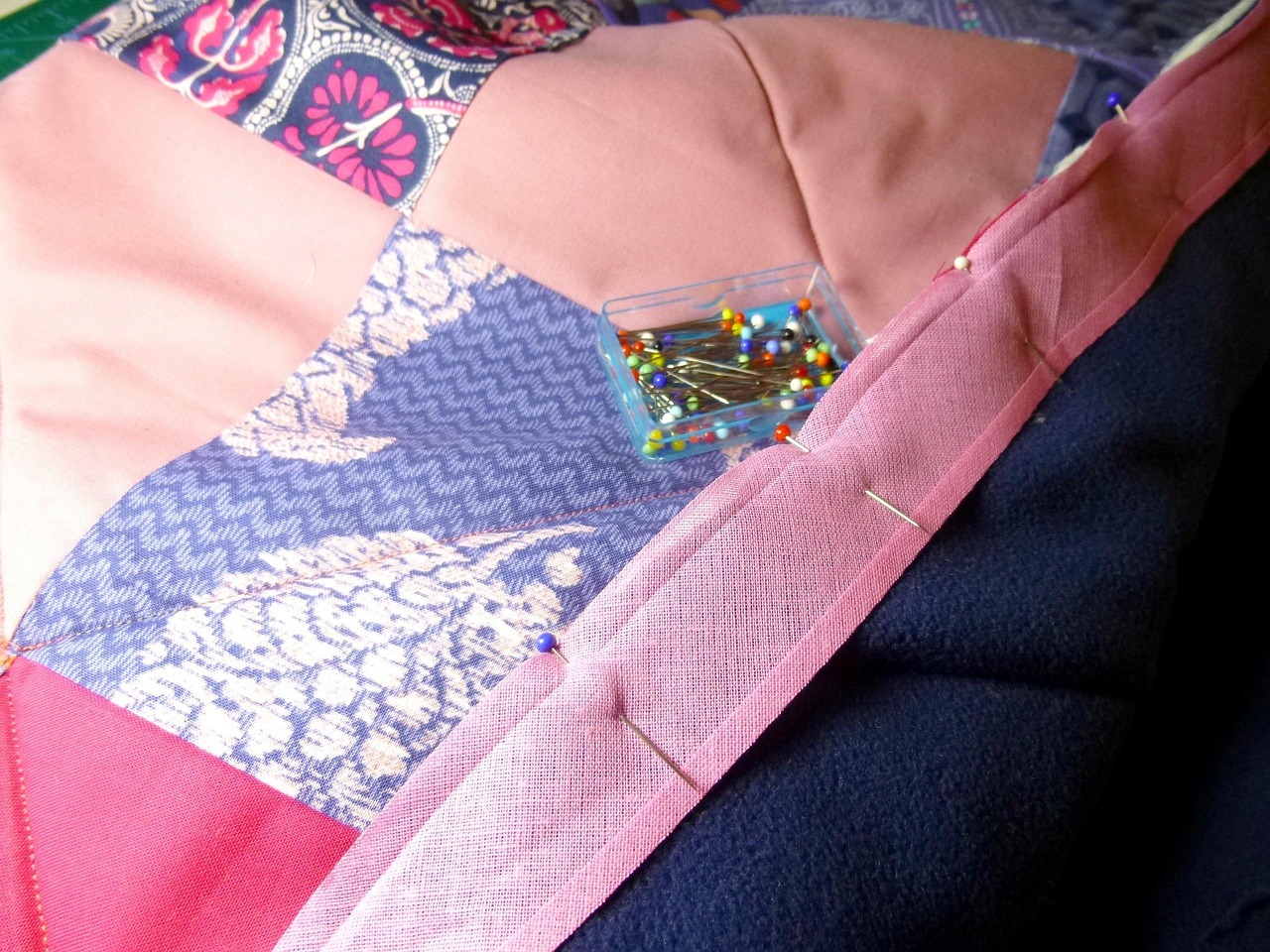
Now, time has changed and so much sewing tools are available to make your work easy. Sewing pins prevent fabric from slipping. The pins hold the fabric together. So, the sewist do not have to hold the fabric while sewing to prevent it from slipping. If you know how to pin fabrics perfectly then stitching will be easy for you.
There are also different types of sewing pins available. Today we will discuss about types of pins and their applications in sewing.
Types Of Sewing Pins
There are various types pins used in sewing depending according to their construction and application.
1. All purpose Sewing Pins
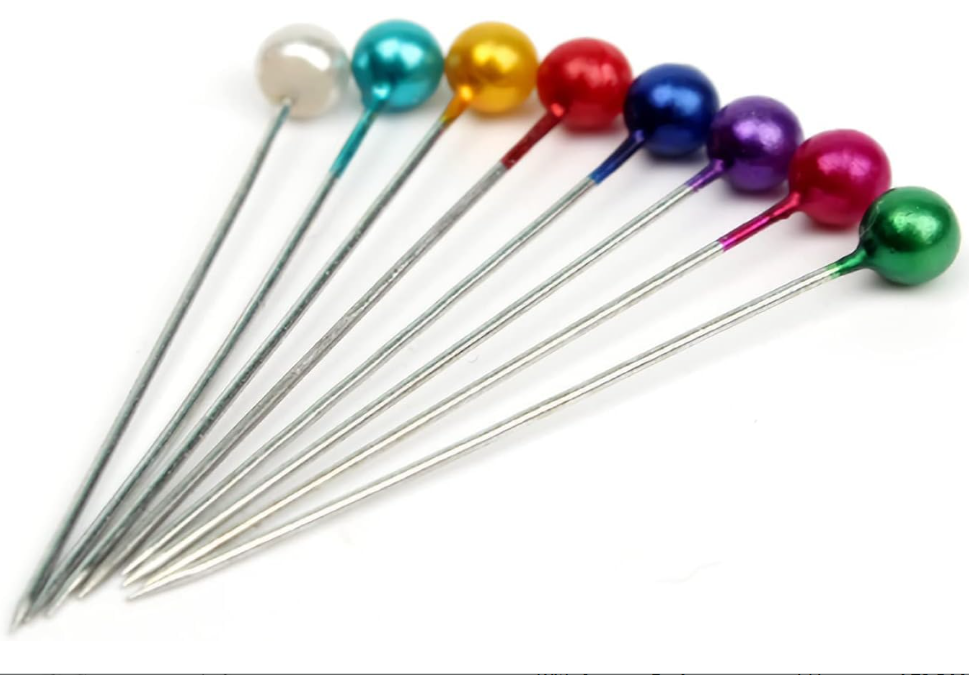
These pins are most commonly used sewing pins. These pins have glass heads and are thin and sharp. These are not flexible but are strong. The general purpose pins are ideal for medium weight woven fabric. General purpose pins are mostly made of nickel plated steel. The nickel plated steel pins are waterproof.
2. Ball Point Pins
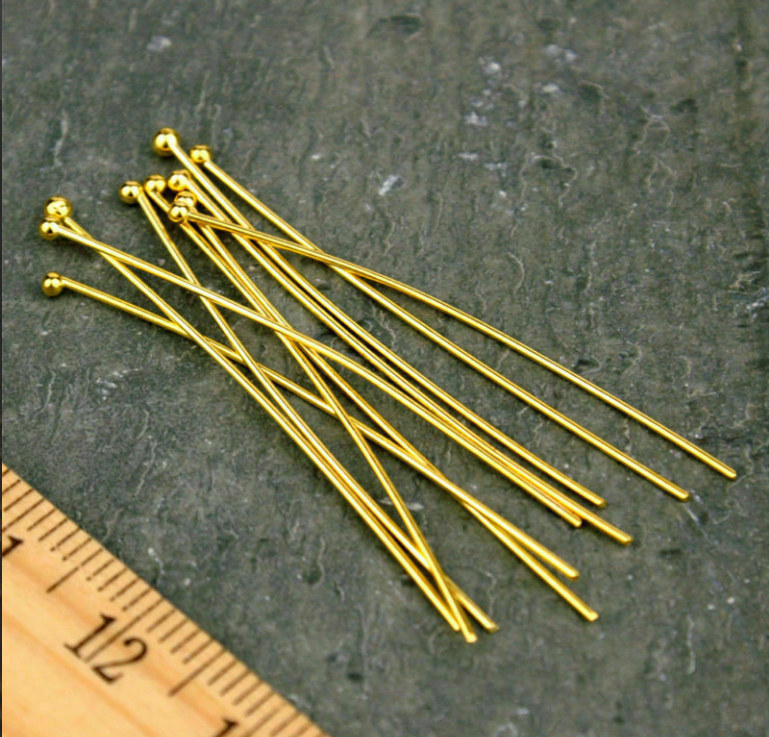
These pins have little rounded ends. That is why these are called ball point pins. This rounded end helps it to slip through the threads of fabric without cutting them.
The ball point pins have nickel plated metal shafts but the head of the pin is made up of plastic. So, try to skip them while pressing, otherwise the heat can melt the head. The metal shaft make them strong.
These pins are best for stretchy and knit fabrics.
3. Flat Button Pins
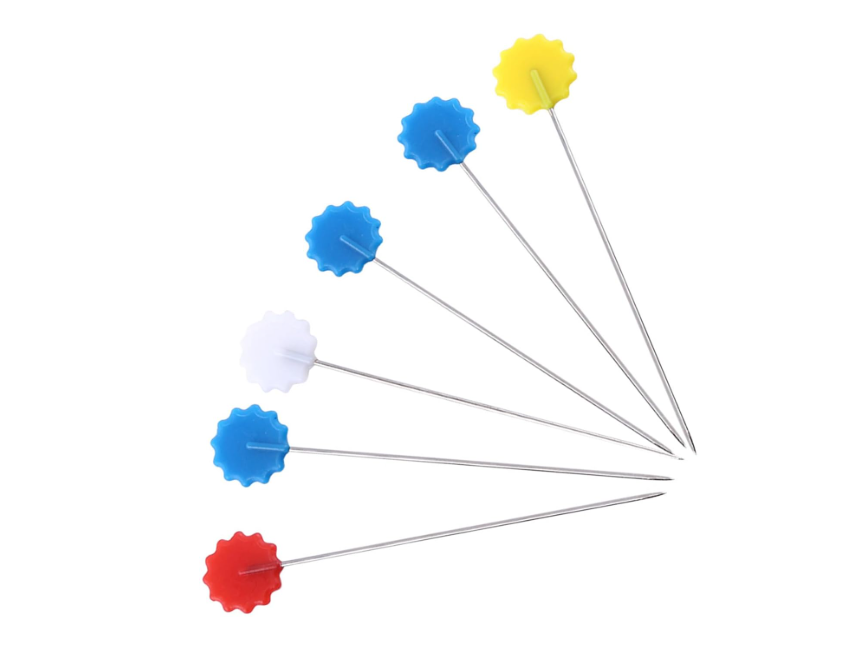
These are called flat button pins because the head of the pins are made op flat buttons. This is very good for holding weave fabrics which prevents slipping of the fabric. These are easy to handle and are good for quilters.
4. Silk Pins
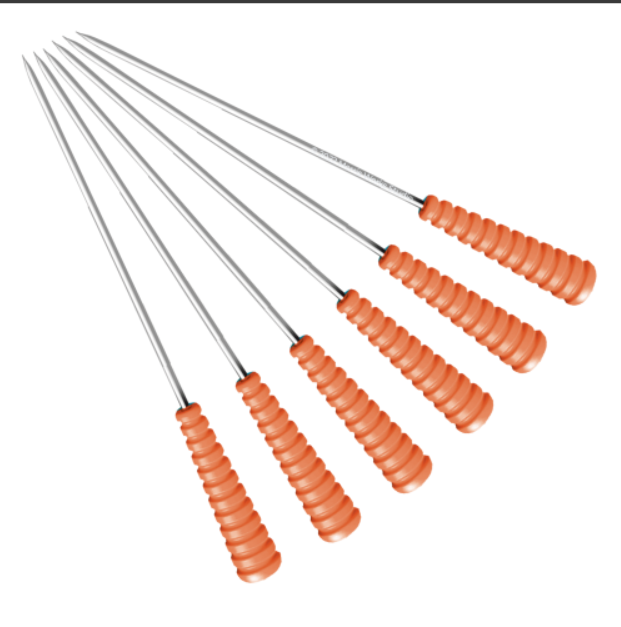
Silk pins are also called extra fine pins. Silk needs extra fine pins because other pins can create large noticeable holes on the garment. as you can not repair silk on your own and other pins can damage the expensive silk fabric.
Silk pins have glass head. They have smaller diameter which make it easy to pierce into the fabric. Silk pins are used in thin, delicate and lightweight fabrics.
5. T-Pins
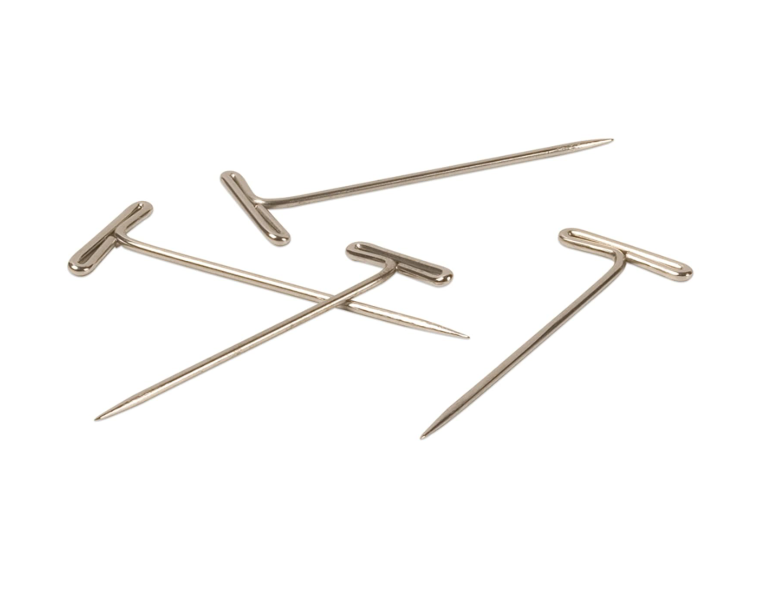
T-pins have a T-shaped head. This T shape allows you to hold them easily. These pins have a horizontal head. These are heavy duty pins and are best for tightly woven materials like upholstery, heavy fabrics and while making buttonholes.
6. Quilting Pins
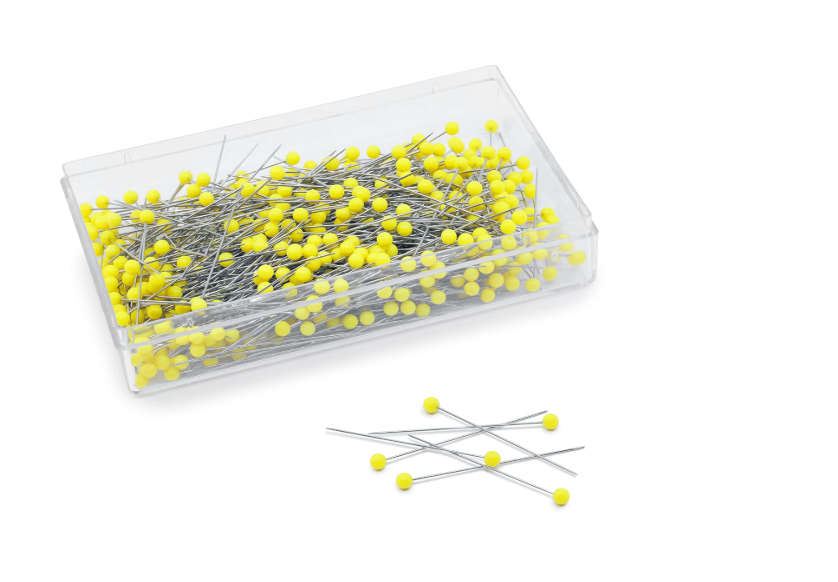
Quilting pins are longer and thinner than regularly used pins. So, that they can grasp multiple layers quilts together. As they are thicker and longer, make sure to use them on those fabrics that can handle them.
7. Glass Head Pins
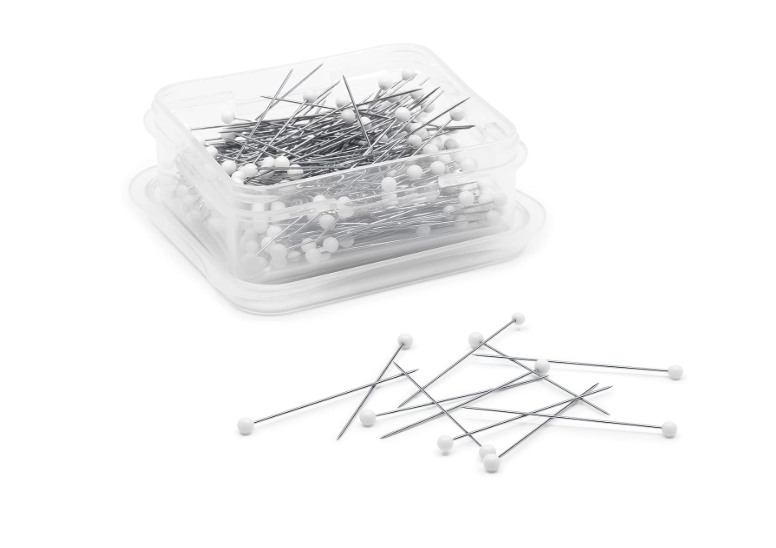
Glass head pins have glass on the top. The glass is colorful. The pins are made of nickel plated steel. These are thinner pins. When the pins will pierce into the fabric they will not create big hole. That is why these are good for fussier fabrics like silk. The pins are of perfect size not too short or too long. One plus point about glass head pins is the glass head will not melt while ironing. The pins are good for wool and heavy weight materials.
8. Plastic Head Pins
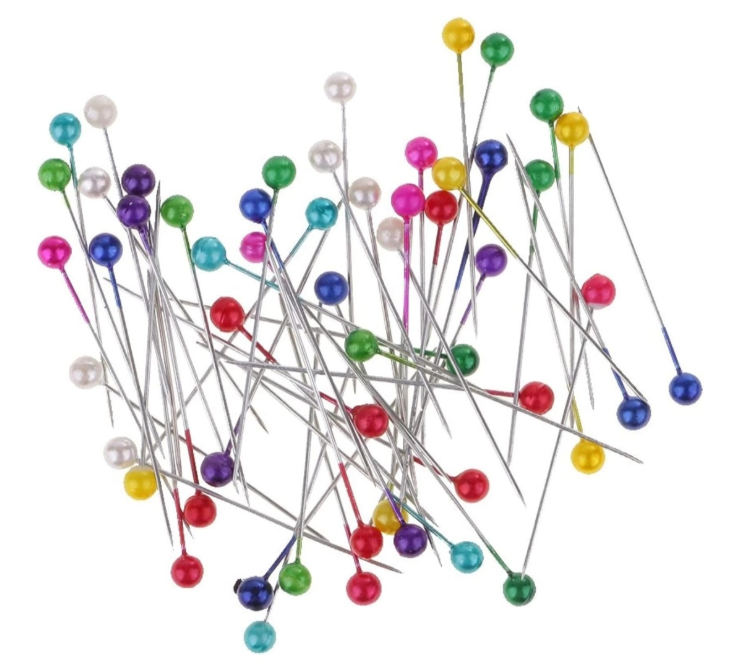
These are like glass head pins but in this case the head is made of plastic. They have big multicolored, beautiful shapes of heart and flowers plastic heads. They are cheaper than glass head pins but, you can’t iron over them.
9. Short Or Applique Pins
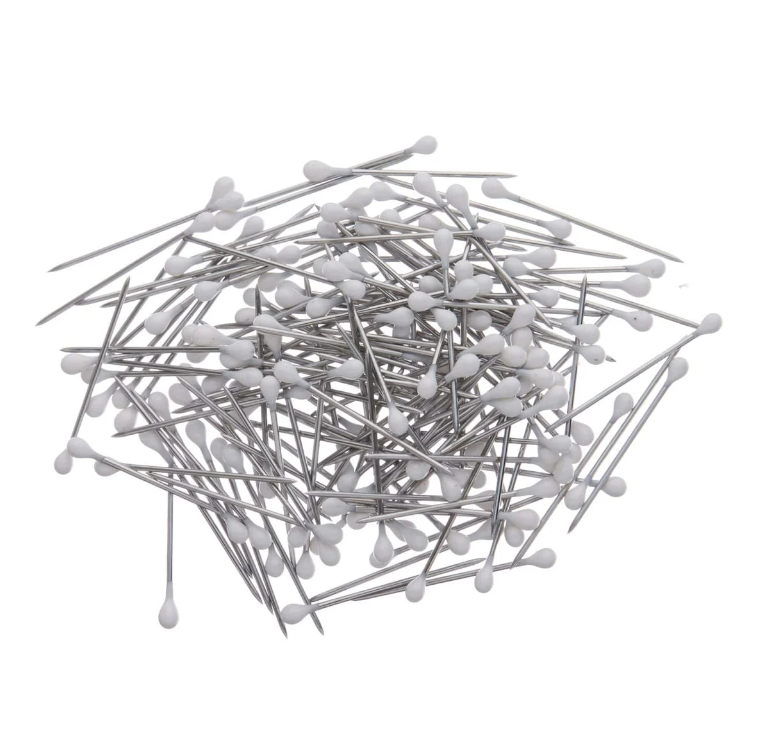
These are short pins having length of 3/4 inch or shorter. This short length is useful in keeping applique pieces pinned on the foundation fabric. They are used in pinning small pleats. Generally used in delicate fabrics.
10. Safety Pins

Safety pins are normal stainless steel pins but have a locking head. These pins are of different sizes from small to large. They are used in quilting, crafting and sewing.
Parts Of a Pin
A sewing pin has 3 parts that is Head, Shaft and point.
Head
Head is top most part of a pin that is used to hold the pin. The head of the pin can be made of glass, plastic or metal. Some pins do not have any head. These are called flat head pins. Some heads are round, some are flat. Some heads have buttons or of different shaped.
Shaft
Shaft is the middle part of the pin between head and point. It is the body of a pin. The thickness of the shaft varies according to the type of pin.
This part of pin is made of metal. The pin can be strong and flexible, that depends upon the length and diameter of the pin. Thicker pins are good for heavier fabrics and thinner pins are good for delicate fabrics.
The pins made of stainless steel are rust free and long lasting. These types of pin will pierced into the fabric smoothly.
Point
Point is the end of the pin. It is the part that first enters into the fabric. Depending on the pin type, points can be of different shape like rounded, sharp etc.
The point of pin can be sharp, extra sharp, ball point or rounded. Fine point pins are good for delicate materials and standard point pins can be used in daily works.
Length Of a Pin
Length of a pin is important in sewing. Always select a pin of perfect length, that will hold multiple layers of fabric together. But dont use pins of too long. Small pins are good for working in tiny pieces. Longer pins of more than 2 inch or more are good for quilting.
A normal straight pin has a length from 1/2 inch to 2 1/8 inch.
Thickness Of the Pin
The thickness of the shaft varies from pin to pin, according to the pin type. The diameter of pin varies from 0.4mm to 0.8mm.
0.4mm pin is the thinnest pin. It is mainly used in sheers, chiffons and stains.
0.5mm pin is called “extra fine” or “super fine” pin. These are used in lightweight fabrics like cotton.
0.6mm is the fine pin. These are all purpose or regular pins. These are mostly used in medium weight fabrics.
0.7mm 0.8mm pins are used in heavy weight fabrics like denim, heavy wools and multi layered quilts. These pins can’t be found easily like others.
How To Store Pins
Pins can be stored in many ways. If not using frequently then one can store them in a small securely closed container. Keep specific pins in different container to avoid mixing of pins.
But, if you are using them frequently, then it is not feasible to store them in closed container. Every time you have to open the container and use the pins. Now a days, there so many options available to store sewing pins.
Pins can be stored in small containers and jars with lids. You carry them while travelling.
You can also store sewing pins in divided organizers like plastic craft boxes, tool boxes or small drawers.
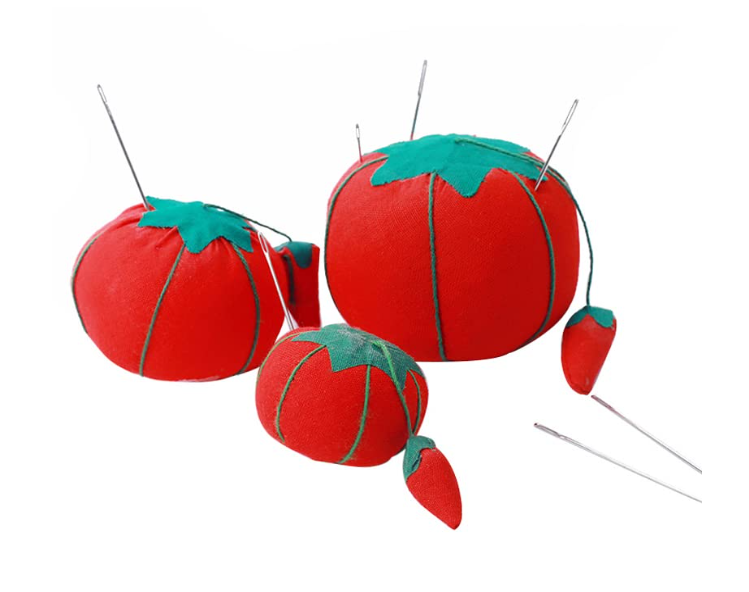
Pin cushions are a very good options to store pins. It will be easy for you to store and use it when needed. You dont need to open the box or anything. Just take the pin out of the cushion and put it there after finishing. Pin cushions are made of high quality wools that will keep the pins sharp. Wrist pin cushions are also available now to keep pins close to your hand.
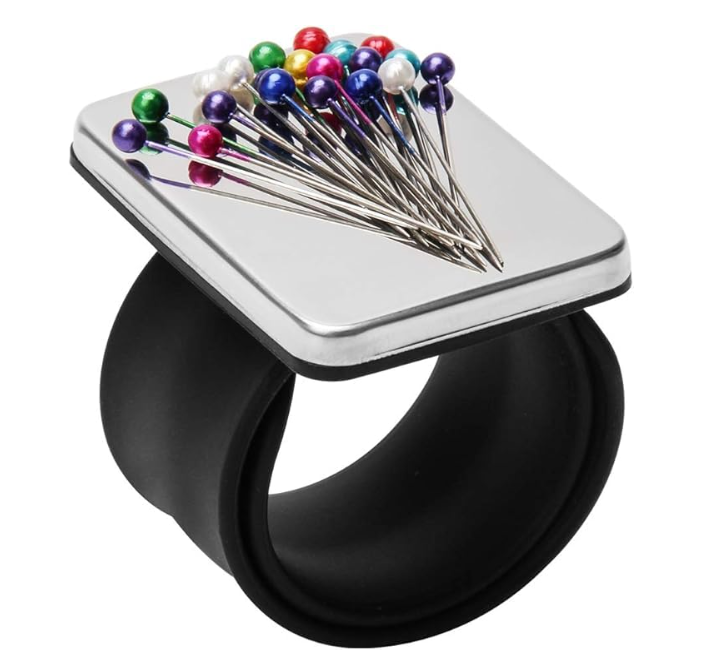
Magnetic pin holders are one of the best options to store pins. It also has “throw and catch” option. It can catch pins and paper clips from the floor and prevent pins from scattering on the floor.
Conclusion
As a sewist, it is always a good idea to gather information on different sewing tools like sewing pins, scissors etc. Because at the end of the day you will need them in everyday use. Do your research according to the need of your project and choose the best sewing pin for you.